Every product you use each day started as nothing more than an idea. From the chair you are sitting on to the phone in your pocket, every object has been carefully planned, developed, tested, and refined before reaching the people who use it.
Turning an idea into a successful product is a structured process rather than a moment of inspiration. Designers must understand the needs of users, explore different solutions, evaluate technical and commercial constraints, and work through multiple rounds of development before a product is ready for manufacture. This complete journey is known as product design.
Product design combines creativity with practical problem-solving. It draws on engineering, manufacturing, business, ergonomics, aesthetics, and user research to create products that are not only attractive but also functional, reliable, and commercially viable. Whether the goal is to design consumer electronics, furniture, medical devices, tools, or industrial equipment, the same core principles guide the development process.
One of the biggest misconceptions about product design is that great products come from brilliant ideas alone. In reality, successful designers spend far more time understanding problems than inventing solutions. By observing how people interact with products, identifying frustrations, and recognizing opportunities for improvement, designers create products that genuinely improve people’s lives.
This course provides a comprehensive introduction to the entire product development process, following the path from an initial concept through to manufacturing. Along the way, you will learn the methods, tools, and techniques used by professional product designers across a wide range of industries.
The course begins with opportunity identification. Before designing anything, it is essential to determine whether a real need exists. You will learn how to research users, analyse markets, identify unmet needs, and evaluate whether an idea has practical and commercial potential.
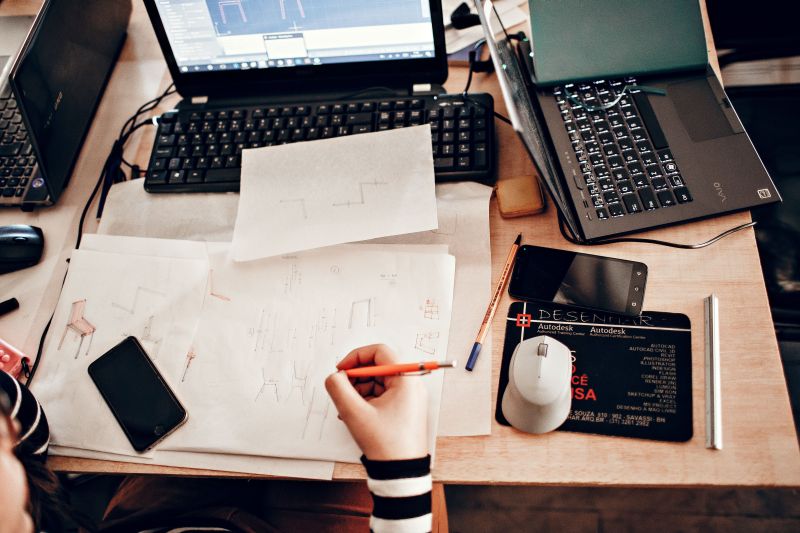
From there, we move into concept generation through sketching. Despite the growth of sophisticated digital design software, hand sketching remains one of the quickest ways to communicate ideas and explore different design directions. You will develop techniques for perspective drawing, form development, shading, presentation sketches, and visual communication that allow ideas to be shared quickly and effectively.
Once concepts have been explored, we examine physical model making. Simple models built from materials such as foam, cardboard, clay, timber, or plastics provide valuable insight into proportions, ergonomics, usability, and appearance long before expensive tooling or manufacturing begins. Learning to evaluate designs with physical models is a key part of professional product development.
The course then introduces Computer-Aided Design (CAD), where concepts become accurate digital models suitable for engineering and production. You will gain an understanding of modern CAD workflows, digital modelling techniques, and the role of CAD throughout the development cycle. We also explore technologies such as 3D scanning and how physical models can be converted into digital designs for further refinement.
With digital models complete, attention turns to prototyping. Modern manufacturing technologies—including 3D printing, CNC machining, laser cutting, and rapid fabrication services—allow designers to produce functional prototypes quickly and cost-effectively. You will learn how prototypes are created, tested, evaluated, and refined through an iterative design process.
A successful product must also be manufacturable, so we examine the realities of production. Topics include manufacturing methods, material selection, assembly processes, quality control, supplier communication, and designing products that can be produced efficiently at commercial scale. Understanding manufacturing constraints allows designers to create products that are both innovative and practical.
As technology continues to evolve, many modern products incorporate electronics and embedded systems. While electronic engineering is a specialist discipline, product designers benefit from understanding the fundamentals of platforms such as Arduino and Raspberry Pi, how electronic components integrate into products, and when collaboration with specialist engineers is required.
The course concludes by exploring the commercial side of product design. Many aspiring designers hope to develop and sell their own products, but the opportunities extend far beyond launching a single invention. Product designers can build rewarding careers in industrial design, CAD modelling, consulting, freelance development, prototyping, engineering support, and product innovation across countless industries. Throughout the course, we discuss practical pathways for turning design skills into professional opportunities.
By completing this course, you will understand how products progress from an initial concept to a finished manufactured item. More importantly, you will develop a structured approach to solving design challenges that can be applied across many different industries and product categories.
Whether your ambition is to work for an established company, provide consulting services, develop products for clients, or build your own product business, the knowledge and techniques presented here will give you a solid foundation for future success.
Product design is one of the few disciplines that blends creativity, engineering, business thinking, and innovation into a single profession. It offers the opportunity to create products that solve real problems, improve everyday life, and shape the future.
Welcome to the course, and let’s begin exploring the fascinating world of product design.
- 1 Section
- 18 Lessons
- Lifetime
- Product Design18
- 1.1Introduction to Product Design
- 1.2Finding Product Opportunities
- 1.3Making Money as a Product Designer
- 1.4Design Thinking and Innovation
- 1.5Sketching and Visual Communication
- 1.6Advanced Sketching Fundamentals
- 1.7Physical Model Making
- 1.8Materials and Manufacturing Fundamentals
- 1.9CAD Design
- 1.10Rapid Prototyping
- 1.11Testing and Iteration
- 1.12Product Engineering Basics
- 1.13Design for Safety and Compliance
- 1.14Costing and Manufacturing Economics
- 1.15Working With Manufacturers
- 1.16Preparing for Mass Production
- 1.17Conclusion
- 1.18Capstone Project